Service Design
UX Design
Social Innovation
Systems Thinking
Craftsmanship in Urban Transition
A service system connecting artisans and citizens through workshops, exhibitions, and products, sustaining traditional indigo craftsmanship within urban life.

Project Details
Role
Service & UX Designer
Focus on Research, Ideation, Service Design
Sole Ownership all UI, Mobile Booking Flow
Team project of 6
Duration
4 months (Oct-Jan 24/25)
Institution
Politecnico di Milano
QIAO bridges traditional indigo craftsmanship from Dali, China with the urban culture of Guiyang. The service promotes exchange between artisans and citizens through workshops, exhibitions, and retail. As part of the design team, beyond Research, Ideation, and Service Design, I had sole ownership of transforming the service into a digital experience that allows users to discover and book workshops, enabling cultural participation beyond the physical hub.
Outcome

QIAO combines spatial and digital touchpoints to bring heritage crafts into modern life. The system is centred around a cultural hub prototype, with an extensive service offering, supported by an online workshop-booking flow.
Design Challenge
How might we bring traditional indigo craftsmanship into the urban context, engaging young citizens and creating sustainable value for artisans in Dali, China?
Process
Research & Cultural Context
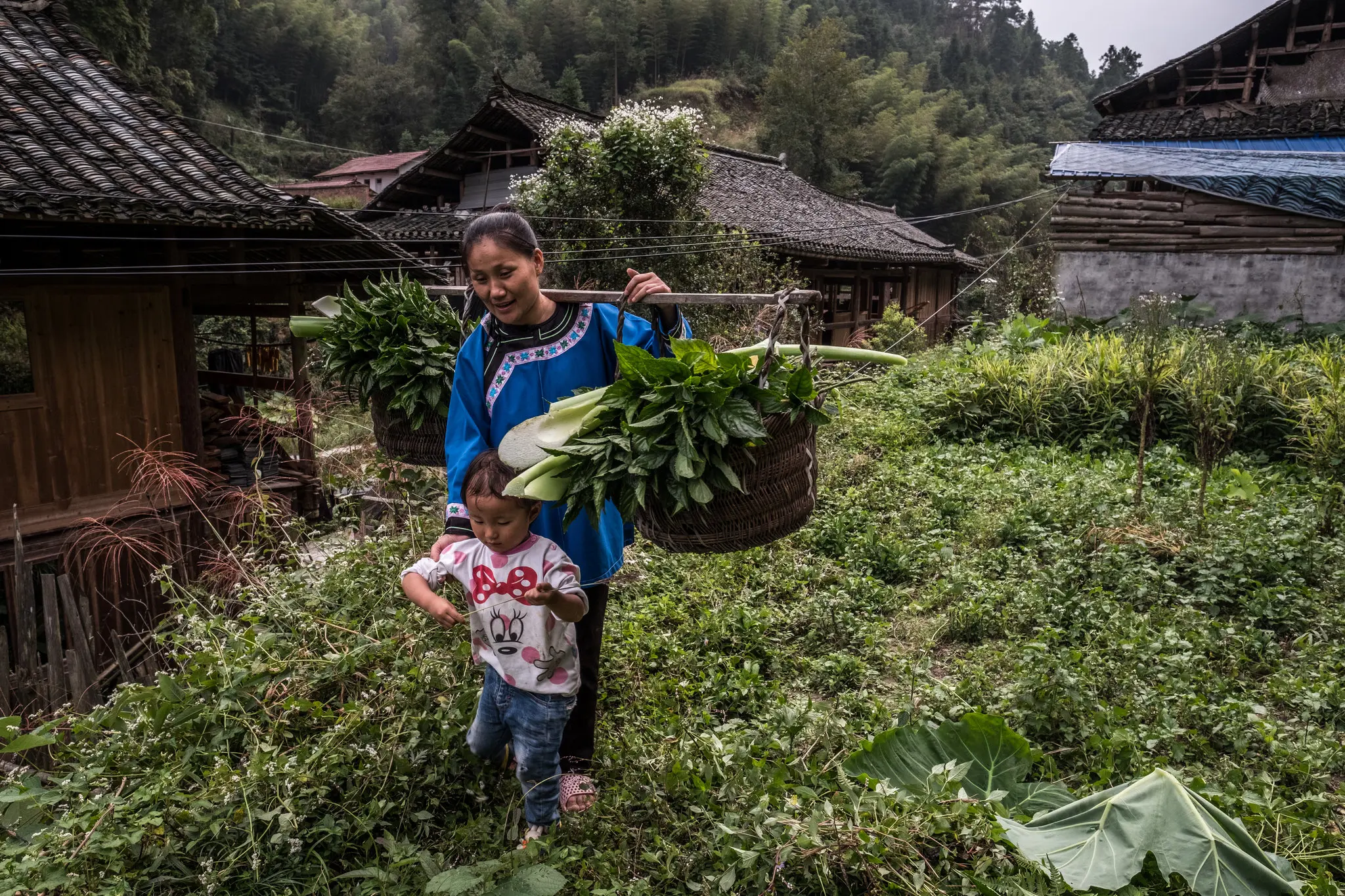
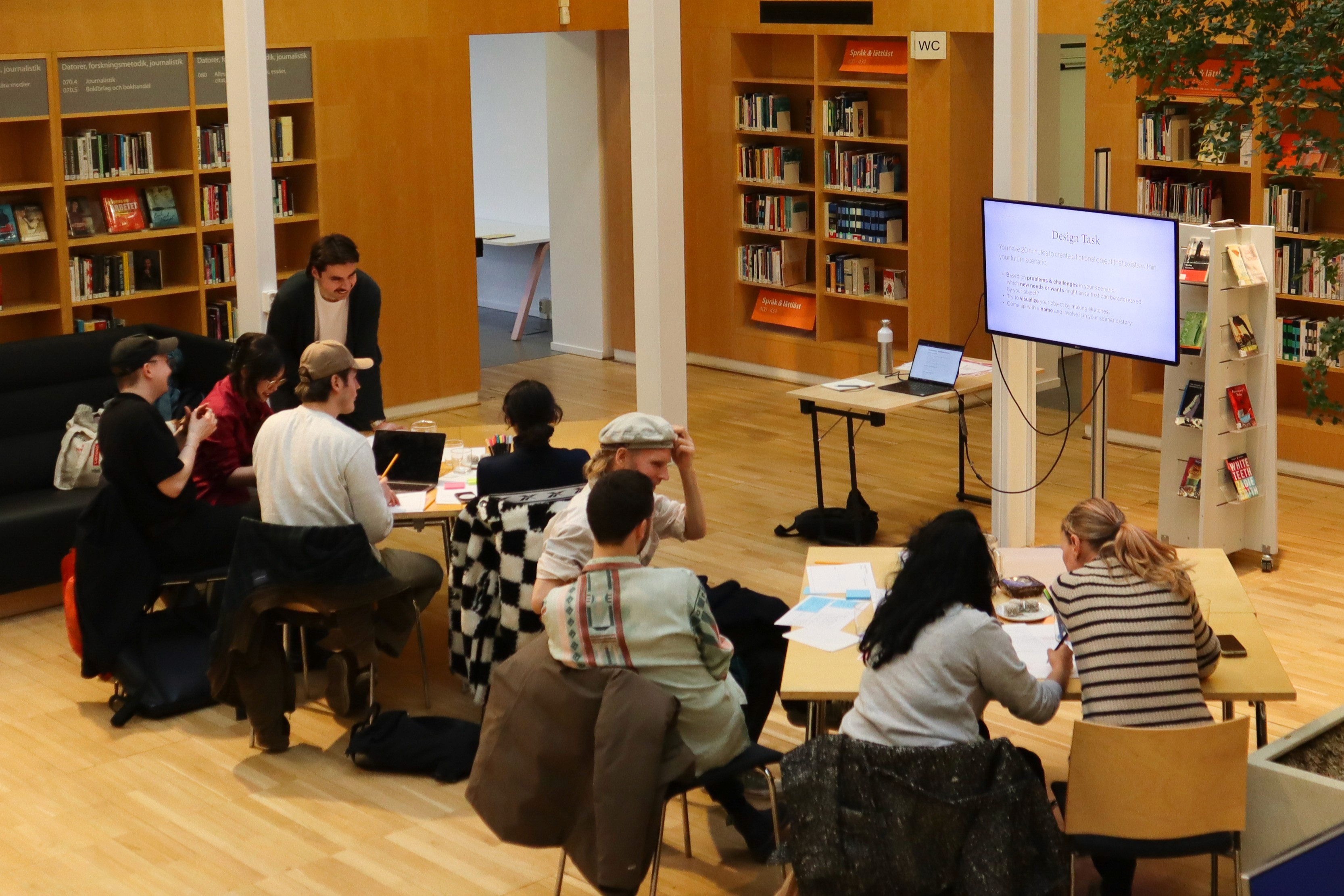
Our international team, including Chinese members, conducted desk research and interviews to study how indigo craftsmanship could adapt to modern life. Interviews and desk research revealed a gap between artisans’ sustainability and citizens’ access to authentic craft experiences.
Ideation & Concept Framing
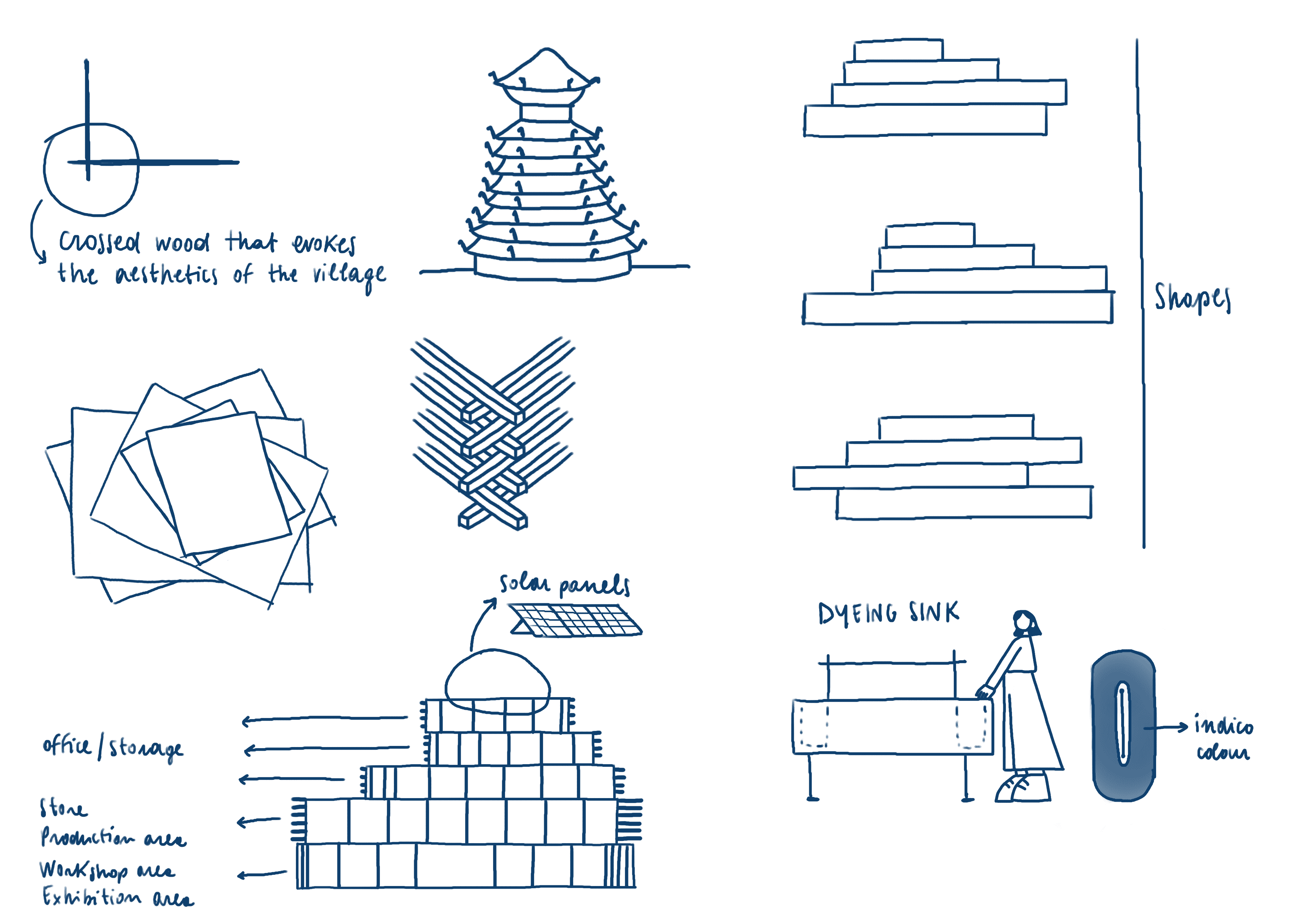
Explored ideas from urban indigo plantations to new product lines before defining QIAO as a cultural hub that buys indigo from artisans and reintroduces the craft to city life through workshops and exhibitions.
Physical Hub Concept
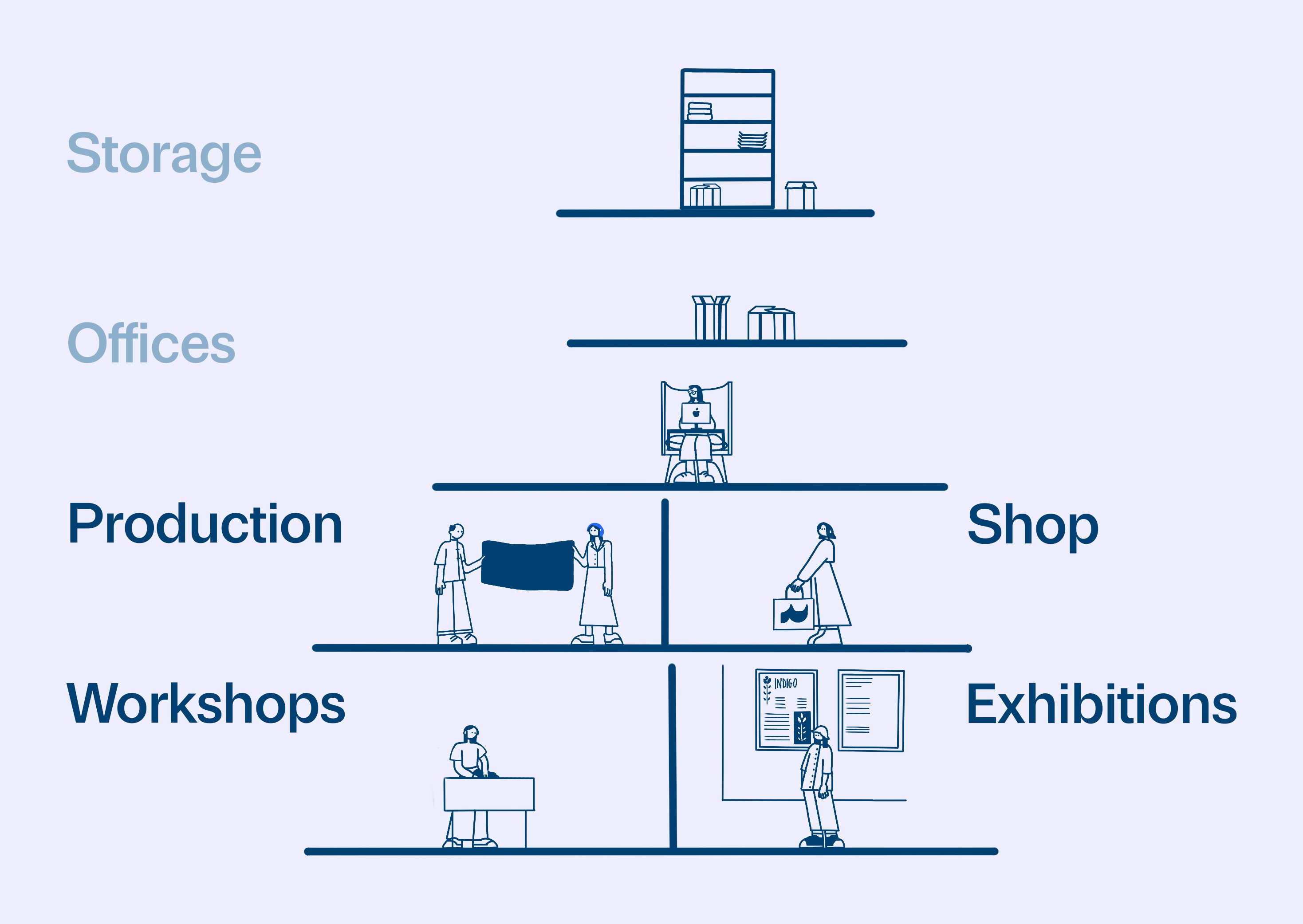
Spatial overview illustrating how workshops, production, retail, and exhibitions connect within the cultural hub.
Wireframe Sketching
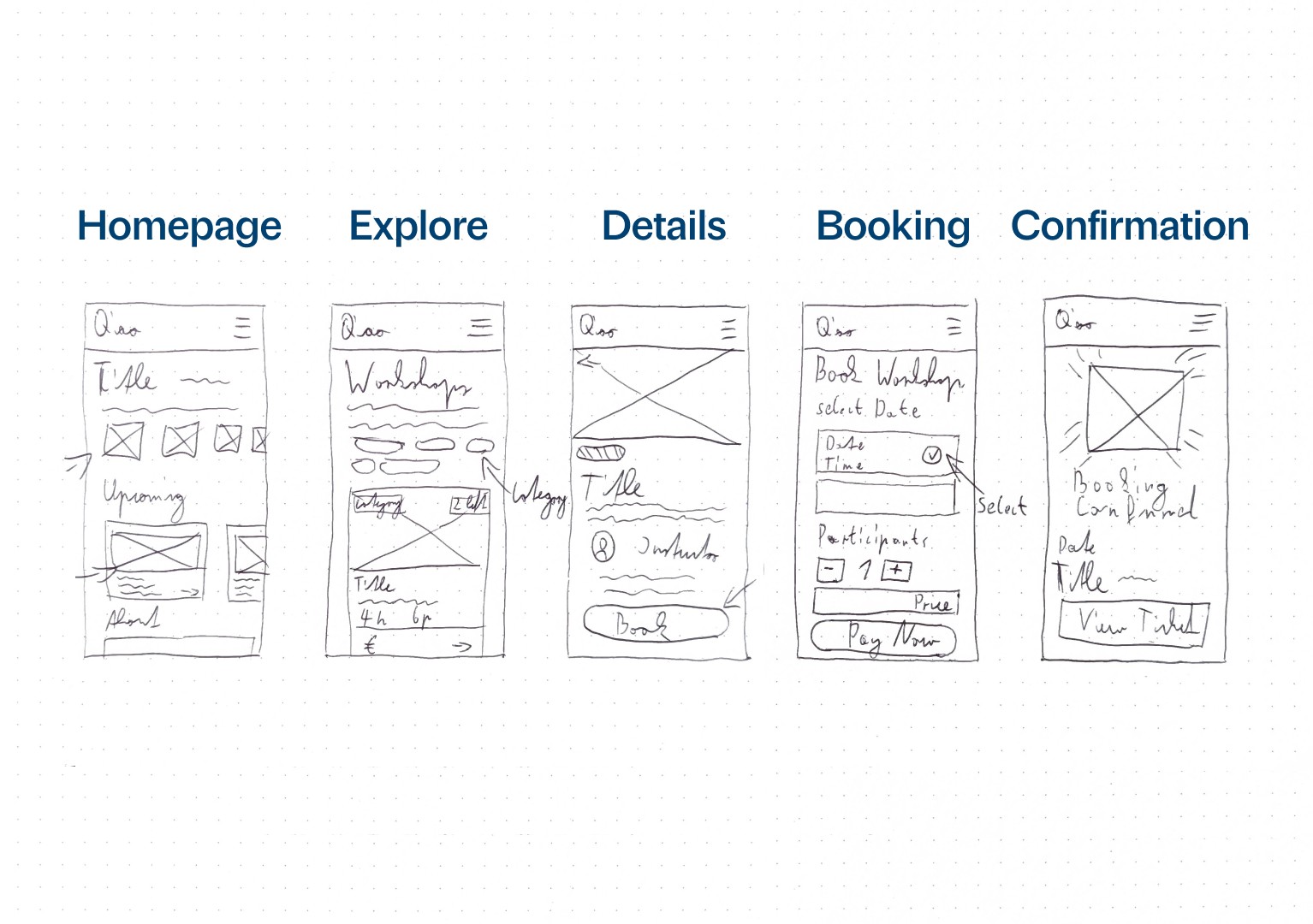
Created quick iterations of lo-fi wireframes for workshop booking to test hierarchy and possible user flows.
User Flow - Workshop Booking
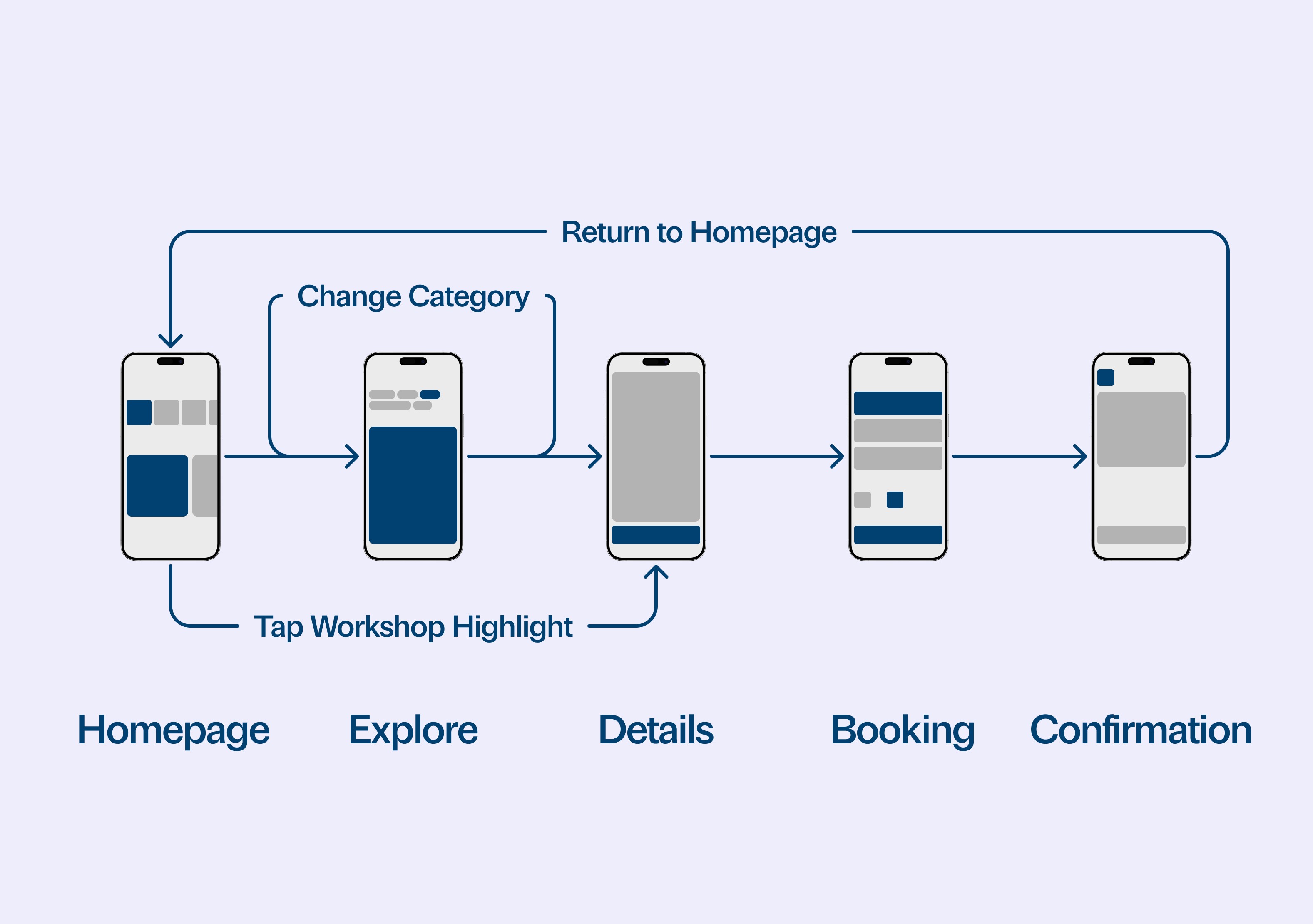
Outlined the key digital journey of the service, workshop booking, to connect online discovery to physical participation and learning at the hub.
Final Outcome
QIAO delivers an integrated service that connects traditional indigo artisans from Dali with citizens in Guiyang through cultural exchange and co-creation. The system combines physical and digital touchpoints, from workshops and exhibitions to an online platform, to make craft heritage accessible and relevant to modern urban life.
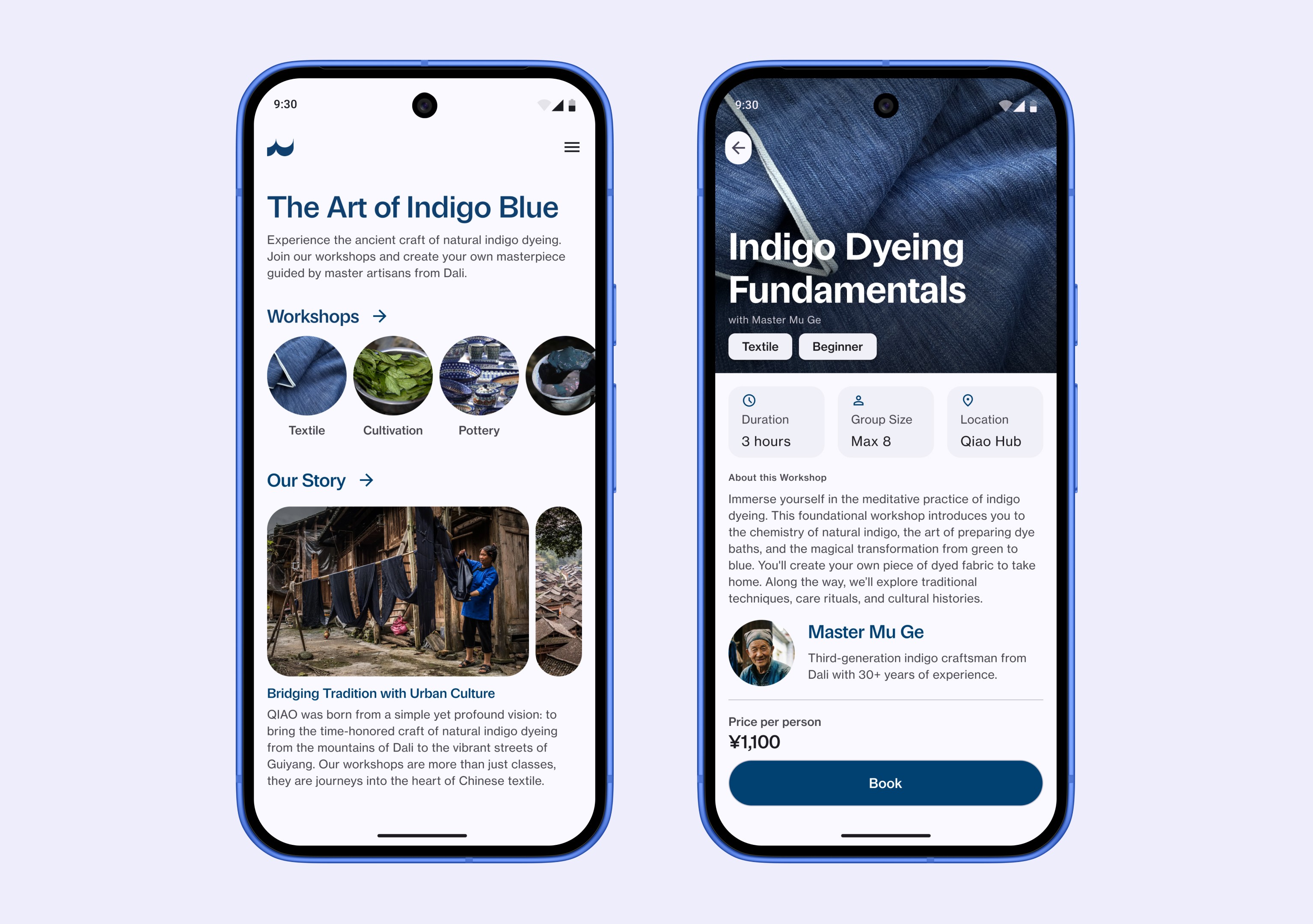
Moving from low-fidelity to high-fidelity, I utilized the Material 3 Design System to ensure consistency and scalability. The Platform Hub (left) prioritizes discovery through clear categorization, while the Workshop Details screen (right) hierarchies key information, price, duration, and artisan bio.
Service Design Deliverables
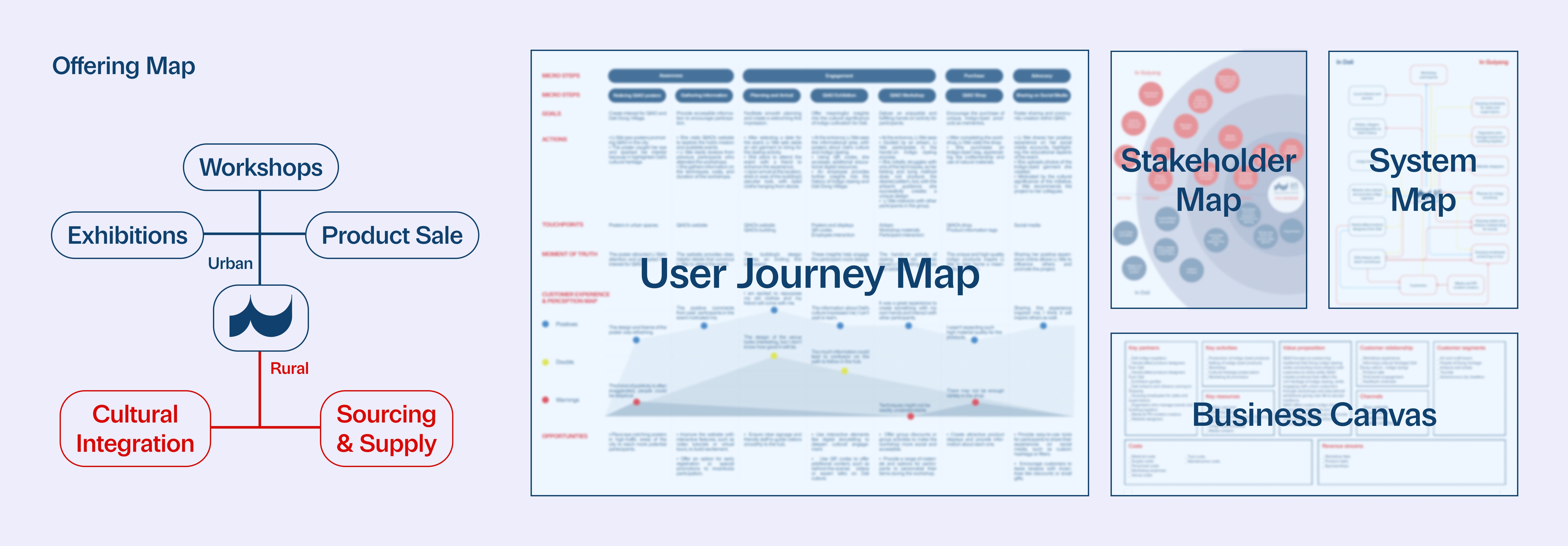
Developed key service-design deliverables to structure interactions across QIAO’s services, a user journey map to define experiences, a stakeholder map to clarify relationships, a system map to trace material, financial, and information flows, and a business canvas to align value and feasibility. The simplified offering map highlights the core experiences at the cultural hub and their connection to rural production and sourcing in Dali.
Scenario Storyboard
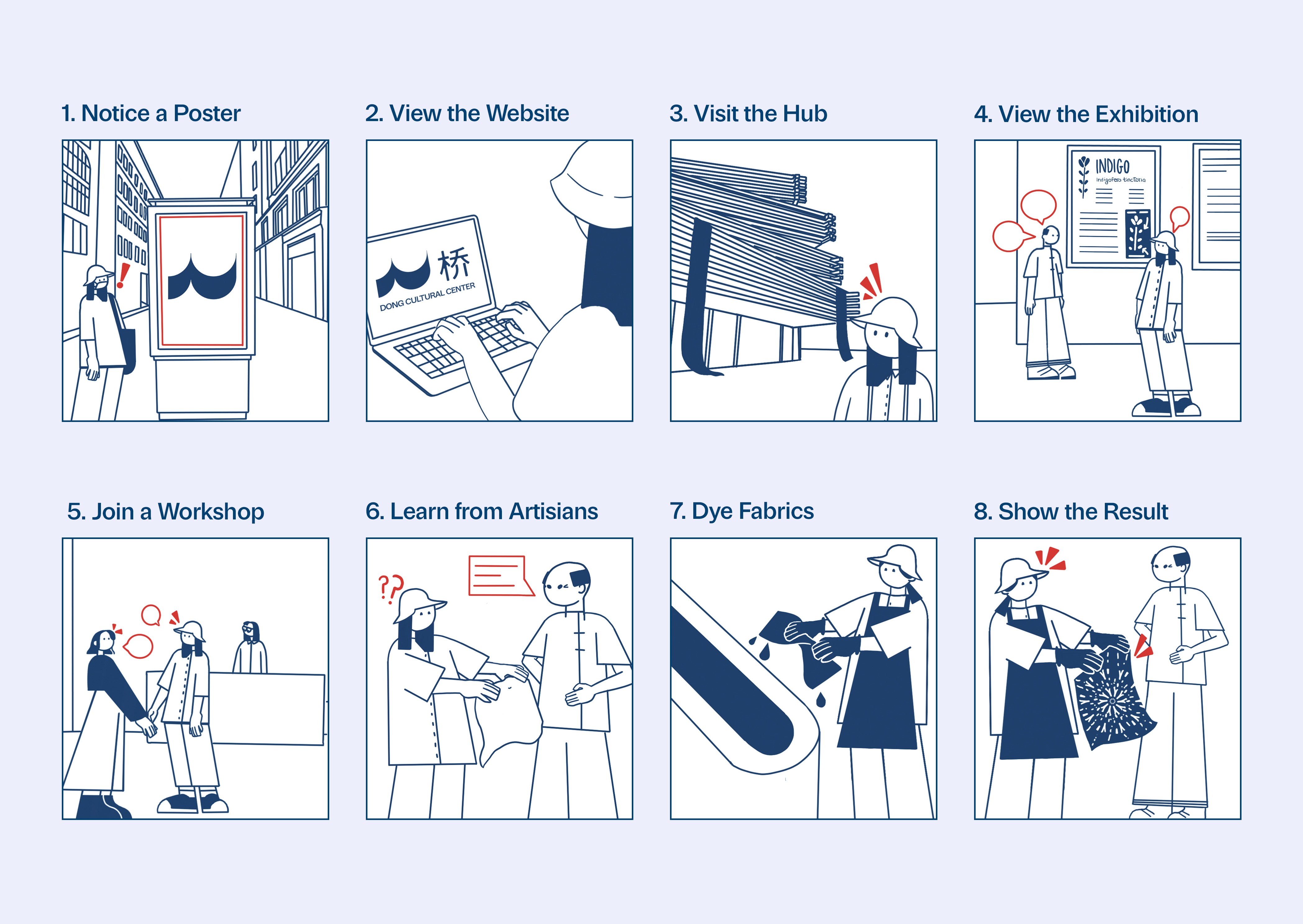
Created a scenario storyboard to illustrate how QIAO connects communication, digital access, and hands-on experience, showing the user journey from first awareness to active participation.
Cultural Hub Prototype
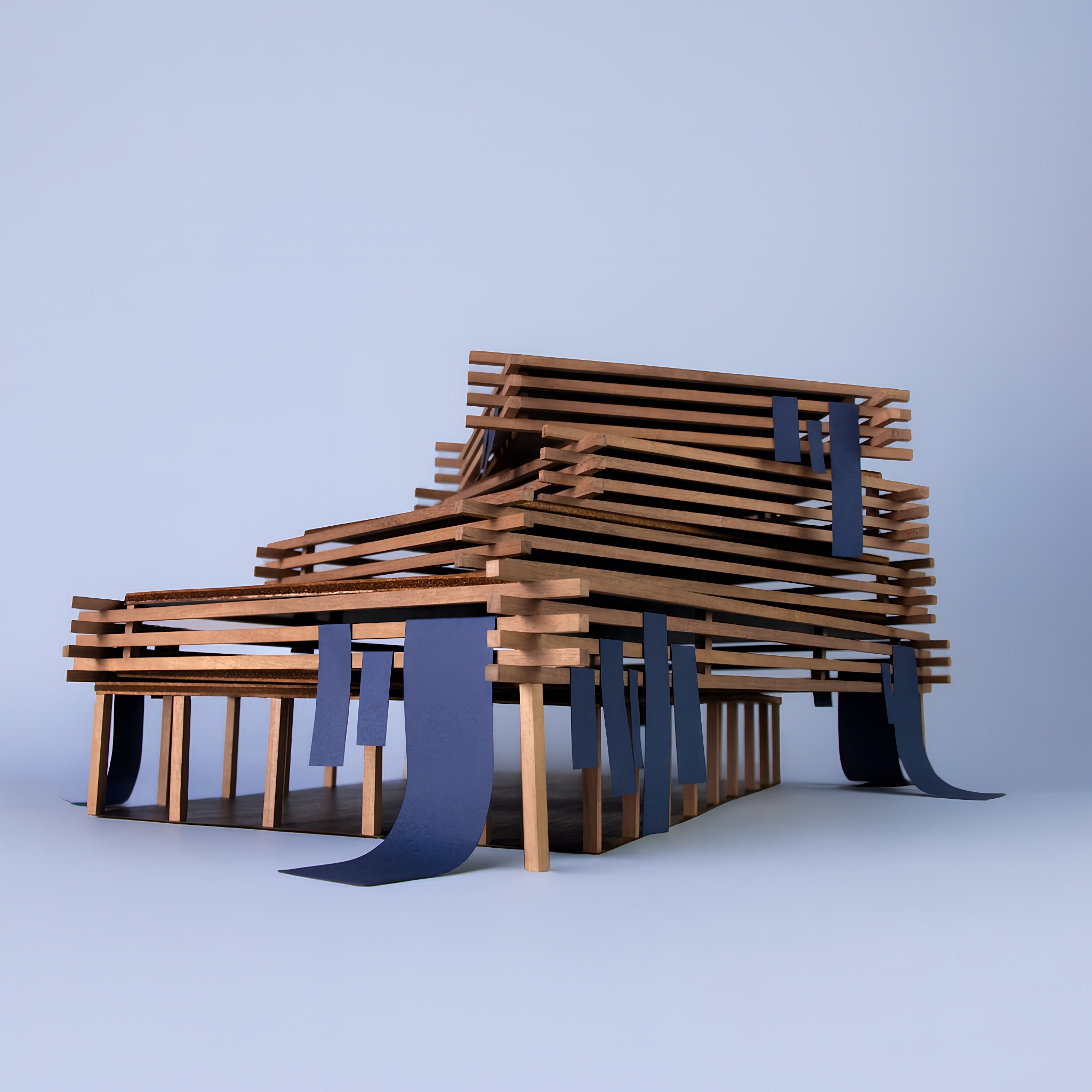
We created a 1:100 scale model of the QIAO cultural hub using layered wood to express the material identity of the project and explore how the service could take physical form.
Exhibition
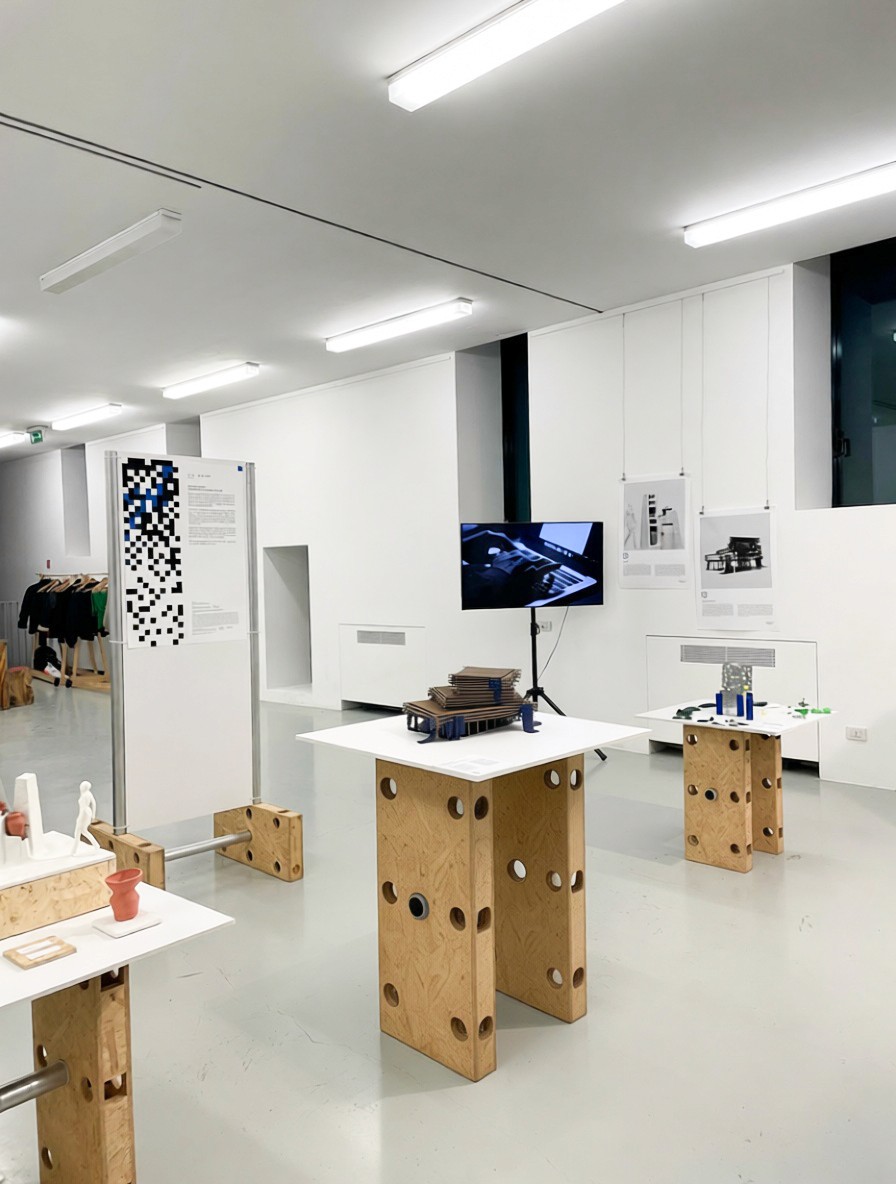
The project was displayed as part of "Disrupting Orders" at STECCA3 in Milan, a public exhibition exploring how design can challenge existing social and environmental orders by reimagining the systems that shape contemporary life.
Reflection
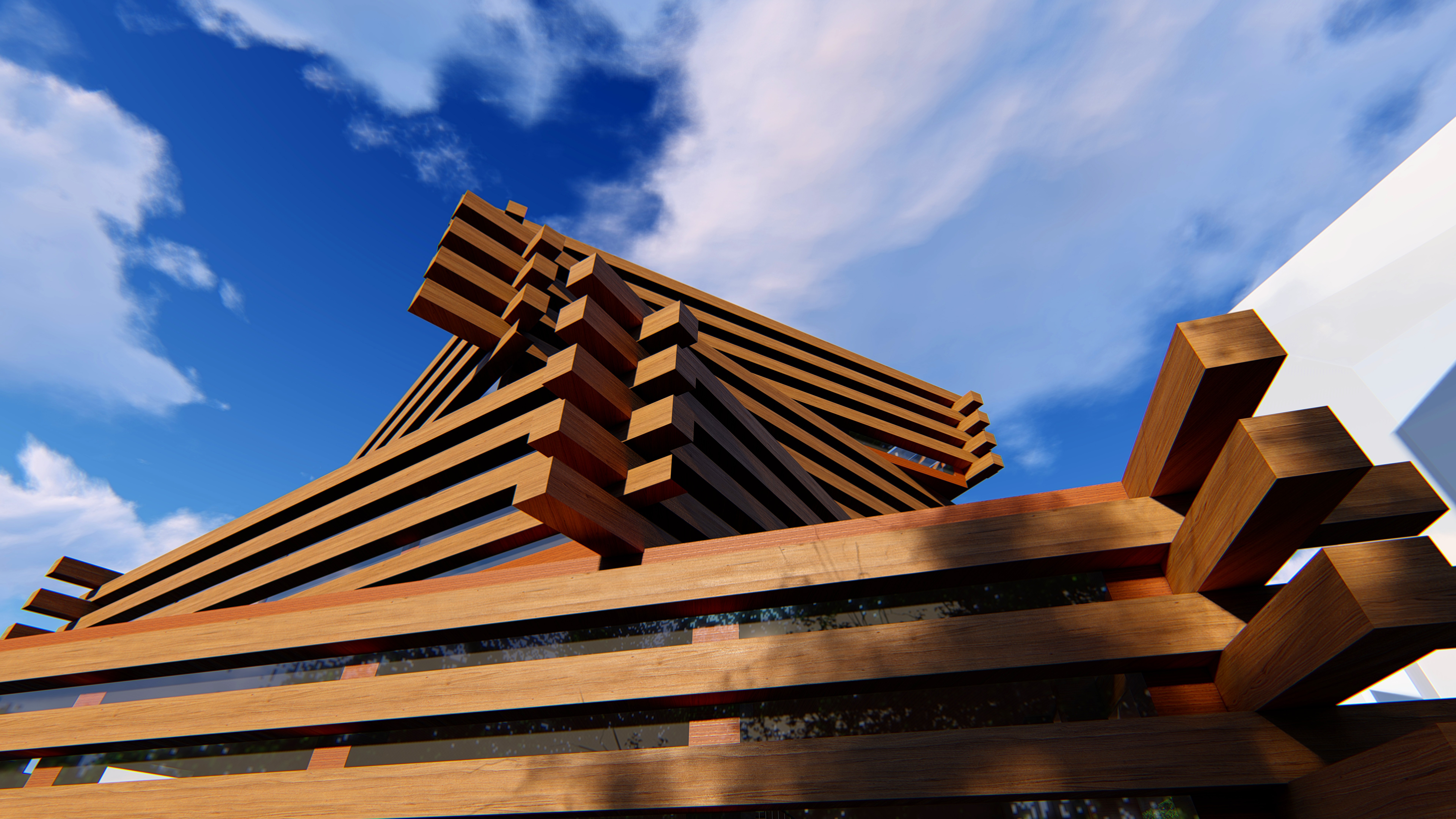
Designing QIAO strengthened my ability to move from systemic thinking to digital interaction design. It taught me to translate cultural values into usable, engaging experiences. Integrating the mobile flow extended the service’s reach, demonstrating how UX can sustain heritage crafts and connect people across contexts.
Service Design
UX Design
Social Innovation
Systems Thinking
Craftsmanship in Urban Transition
A service system connecting artisans and citizens through workshops, exhibitions, and products, sustaining traditional indigo craftsmanship within urban life.
Project Details
Role
Service & UX Designer
Digital touchpoints
Team project of 6
Duration
4 months (Oct-Jan 24/25)
Institution
Politecnico di Milano
QIAO bridges traditional indigo craftsmanship from Dali, China with the urban culture of Guiyang. The service promotes exchange between artisans and citizens through workshops, exhibitions, and retail. As part of the design team, beyond Research, Ideation, and Service Design, I had sole ownership of transforming the service into a digital experience that allows users to discover and book workshops, enabling cultural participation beyond the physical hub.
Outcome
QIAO combines spatial and digital touchpoints to bring heritage crafts into modern life. The system is centred around a cultural hub prototype, with an extensive service offering, supported by an online workshop-booking flow.
Design Challenge
How might we bring traditional indigo craftsmanship into the urban context, engaging young citizens and creating sustainable value for artisans in Dali, China?
Process
Research & Cultural Context
Our international team, including Chinese members, conducted desk research and interviews to study how indigo craftsmanship could adapt to modern life. Interviews and desk research revealed a gap between artisans’ sustainability and citizens’ access to authentic craft experiences.
Ideation & Concept Framing
Explored ideas from urban indigo plantations to new product lines before defining QIAO as a cultural hub that buys indigo from artisans and reintroduces the craft to city life through workshops and exhibitions.
Physical Hub Concept
Spatial overview illustrating how workshops, production, retail, and exhibitions connect within the cultural hub.
Wireframe Sketching
Created quick iterations of lo-fi wireframes for workshop booking to test hierarchy and possible user flows.
User Flow - Workshop Booking
Outlined the key digital journey of the service, workshop booking, to connect online discovery to physical participation and learning at the hub.
Final Outcome
QIAO delivers an integrated service that connects traditional indigo artisans from Dali with citizens in Guiyang through cultural exchange and co-creation. The system combines physical and digital touchpoints, from workshops and exhibitions to an online platform, to make craft heritage accessible and relevant to modern urban life.
Moving from low-fidelity to high-fidelity, I utilized the Material 3 Design System to ensure consistency and scalability. The Platform Hub (left) prioritizes discovery through clear categorization, while the Workshop Details screen (right) hierarchies key information, price, duration, and artisan bio.
Service Design Deliverables
Developed key service-design deliverables to structure interactions across QIAO’s services, a user journey map to define experiences, a stakeholder map to clarify relationships, a system map to trace material, financial, and information flows, and a business canvas to align value and feasibility. The simplified offering map highlights the core experiences at the cultural hub and their connection to rural production and sourcing in Dali.
Scenario Storyboard
Created a scenario storyboard to illustrate how QIAO connects communication, digital access, and hands-on experience, showing the user journey from first awareness to active participation.
Cultural Hub Prototype
We created a 1:100 scale model of the QIAO cultural hub using layered wood to express the material identity of the project and explore how the service could take physical form.
Exhibition
The project was displayed as part of "Disrupting Orders" at STECCA3 in Milan, a public exhibition exploring how design can challenge existing social and environmental orders by reimagining the systems that shape contemporary life.
Reflection
Designing QIAO strengthened my ability to move from systemic thinking to digital interaction design. It taught me to translate cultural values into usable, engaging experiences. Integrating the mobile flow extended the service’s reach, demonstrating how UX can sustain heritage crafts and connect people across contexts.
Service Design
UX Design
Social Innovation
Systems Thinking
Craftsmanship in Urban Transition
A service system connecting artisans and citizens through workshops, exhibitions, and products, sustaining traditional indigo craftsmanship within urban life.
Project Details
Role
Sole Designer
Duration
4 months
(Feb - Jun 25)
Institution
Politecnico di Milano
QIAO bridges traditional indigo craftsmanship from Dali, China with the urban culture of Guiyang. The service promotes exchange between artisans and citizens through workshops, exhibitions, and retail. As part of the design team, beyond Research, Ideation, and Service Design, I had sole ownership of transforming the service into a digital experience that allows users to discover and book workshops, enabling cultural participation beyond the physical hub.
Outcome
QIAO combines spatial and digital touchpoints to bring heritage crafts into modern life. The system is centred around a cultural hub prototype, with an extensive service offering, supported by an online workshop-booking flow.
Design Challenge
How might we bring traditional indigo craftsmanship into the urban context, engaging young citizens and creating sustainable value for artisans in Dali, China?
Process
Research & Cultural Context
Our international team, including Chinese members, conducted desk research and interviews to study how indigo craftsmanship could adapt to modern life. Interviews and desk research revealed a gap between artisans’ sustainability and citizens’ access to authentic craft experiences.
Ideation & Concept Framing
Explored ideas from urban indigo plantations to new product lines before defining QIAO as a cultural hub that buys indigo from artisans and reintroduces the craft to city life through workshops and exhibitions.
Physical Hub Concept
Spatial overview illustrating how workshops, production, retail, and exhibitions connect within the cultural hub.
Wireframe Sketching
Created quick iterations of lo-fi wireframes for workshop booking to test hierarchy and possible user flows.
User Flow - Workshop Booking
Outlined the key digital journey of the service, workshop booking, to connect online discovery to physical participation and learning at the hub.
Final Outcome
QIAO delivers an integrated service that connects traditional indigo artisans from Dali with citizens in Guiyang through cultural exchange and co-creation. The system combines physical and digital touchpoints, from workshops and exhibitions to an online platform, to make craft heritage accessible and relevant to modern urban life.
Moving from low-fidelity to high-fidelity, I utilized the Material 3 Design System to ensure consistency and scalability. The Platform Hub (left) prioritizes discovery through clear categorization, while the Workshop Details screen (right) hierarchies key information, price, duration, and artisan bio.
Service Design Deliverables
Developed key service-design deliverables to structure interactions across QIAO’s services, a user journey map to define experiences, a stakeholder map to clarify relationships, a system map to trace material, financial, and information flows, and a business canvas to align value and feasibility. The simplified offering map highlights the core experiences at the cultural hub and their connection to rural production and sourcing in Dali.
Scenario Storyboard
Created a scenario storyboard to illustrate how QIAO connects communication, digital access, and hands-on experience, showing the user journey from first awareness to active participation.
Cultural Hub Prototype
We created a 1:100 scale model of the QIAO cultural hub using layered wood to express the material identity of the project and explore how the service could take physical form.
Exhibition
The project was displayed as part of "Disrupting Orders" at STECCA3 in Milan, a public exhibition exploring how design can challenge existing social and environmental orders by reimagining the systems that shape contemporary life.
Reflection
Designing QIAO strengthened my ability to move from systemic thinking to digital interaction design. It taught me to translate cultural values into usable, engaging experiences. Integrating the mobile flow extended the service’s reach, demonstrating how UX can sustain heritage crafts and connect people across contexts.